
The practical answer: build a reusable-diaper routine around the current product instructions, a comfortable fit, frequent checks, a clean replacement supply and a wash method that matches every care label. No diaper can guarantee freedom from leaks, irritation or overnight performance, and persistent redness, broken skin, fever or unusual discomfort needs professional medical advice.
Start with the exact listing and the child’s current measurements
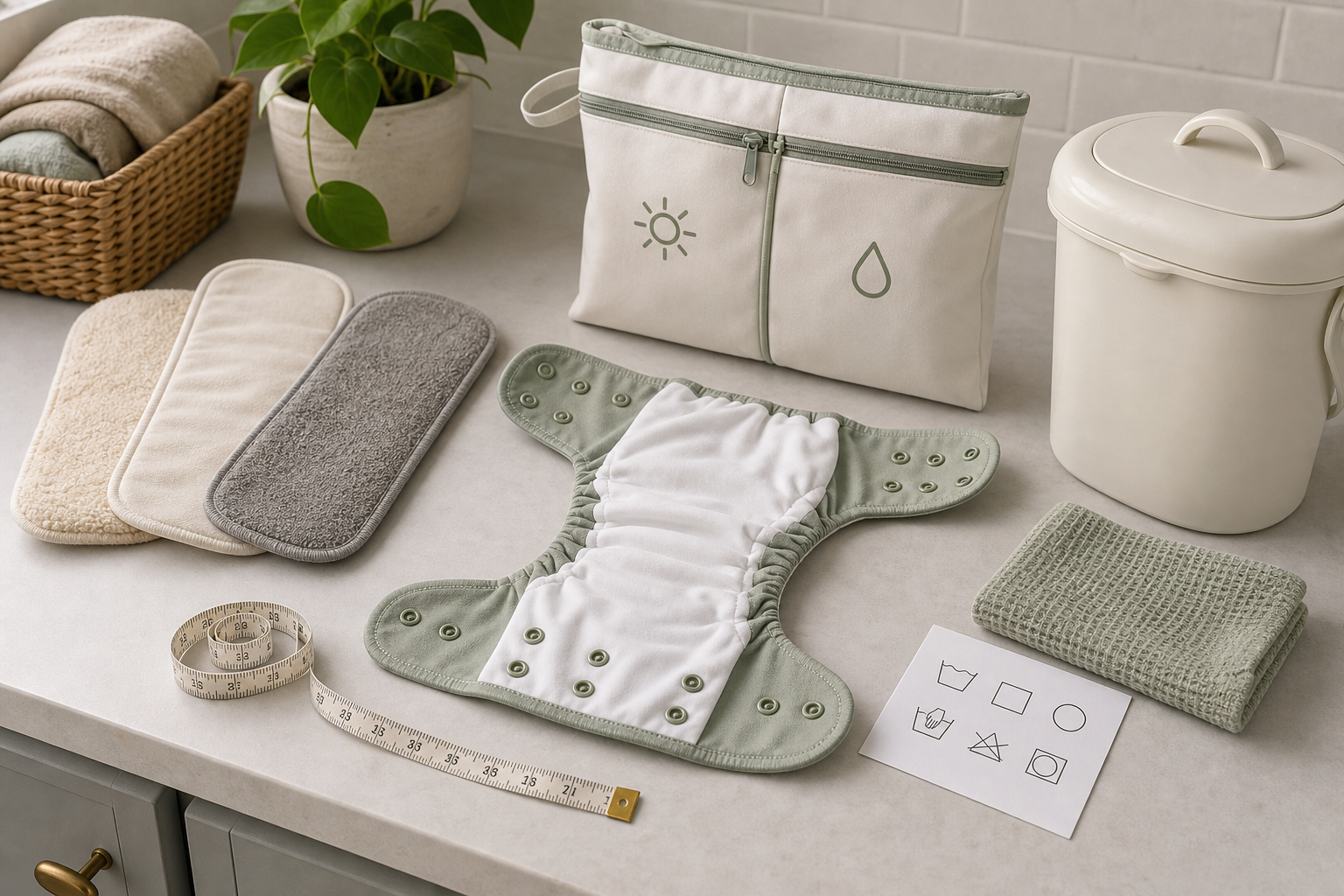
Age ranges in product names are only a starting point. Measure according to the current size chart and check the stated weight range, closure system and included pieces before ordering. The Adjustable Reusable Cloth Diaper uses snaps, but the received diaper and its live instructions—not a general assumption—determine how those snaps should be configured.
At every change, confirm that the waist sits securely without pressing into the abdomen. Check each leg opening for a close seal without pinching. You should be able to move a finger comfortably at the edges. Deep marks, swelling, numbness, persistent redness or obvious distress are reasons to remove the diaper and reassess the fit. Never force a smaller setting to chase a leak-free promise.
Match inserts to the shell and instructions
The Liner Insert for Babies is a separate component. Confirm that its size and construction are compatible with the selected shell. Place it only as the product instructions show; bunching, folding or protruding fabric can change the fit. Product titles may describe bamboo, microfiber, charcoal or other materials, but care rules can differ even when the words sound similar.
| Routine point | What to verify | Why it matters |
|---|---|---|
| Before use | Size chart, included pieces, care label | Prevents assumptions about fit and washing |
| At a change | Waist, leg openings, skin and insert position | Finds fit or comfort problems early |
| After removal | Fasteners, elastic, seams and residue | Damaged parts may not perform as intended |
| Before storage | Soil removal and airflow | Supports a cleaner, manageable routine |
Use a repeatable change sequence
- Wash and dry your hands and prepare a clean replacement before starting.
- Keep the child safely supported on the changing surface; never step away.
- Remove the used diaper, handling solids according to local sanitation guidance and the product instructions.
- Clean the skin gently and allow it to dry. Avoid adding powders, creams or detergents that the diaper maker or clinician says are unsuitable.
- Fit the clean diaper, then movement-check the waist and legs.
- Wash your hands again and clean the changing surface as appropriate.
The CDC emphasizes handwashing after diaper changes. A routine is helpful because it reduces forgotten steps, not because it makes a health guarantee. Check the diaper frequently and change promptly when soiled. Follow the child’s health-care guidance when illness, medication, allergies or a skin condition changes the usual routine.
Separate clean, damp and soiled items
A Wet Dry Bag may help organize a change kit, but “waterproof” in a title should not be treated as a leak-proof or odor-proof guarantee. Verify the live listing, zipper arrangement, seams and cleaning directions. Keep unused clean items in the dry compartment and avoid overfilling.
At home, a Reusable Diaper Pail Liner can support a rotation if it fits the chosen container and its care instructions match the household process. Keep the container inaccessible to children, follow local waste rules, and do not mix cleaning chemicals. Never create chlorine gas by combining bleach with ammonia, acids or other cleaners.
Wash by every component’s label
Separate inserts, shells, bags and liners when their instructions require it. Remove solids as directed, close hook-and-loop fasteners if applicable and use the recommended water temperature, detergent amount and cycle. More detergent is not automatically cleaner; residue or inadequate rinsing can create its own problems. Conversely, an improvised “natural” method may not clean effectively.
Do not copy a wash routine from another material without checking labels. Avoid bleach, fabric softener, fragrances, dryer heat, soaking or sanitizers unless the exact component instructions allow them. Dry fully before storage, using ventilation and the permitted drying method. Inspect elastic, snaps, seams, laminate and inserts after washing; retire pieces that are cracked, delaminated, misshapen or no longer secure.
Build a small rotation before scaling up
Test a manageable number of changes first. Record which snap setting, insert and wash cycle were used, then adjust one variable at a time. This is more useful than assuming a large bundle will suit every child or routine. Keep disposables or another safe backup available for travel, illness, laundry delays or a product mismatch.
Skin comfort and when to seek help
No reusable system prevents diaper rash. Frequent changes, gentle cleaning and a dry, comfortable fit are general care steps, but skin reactions can have many causes. Contact a qualified clinician for persistent or worsening redness, blisters, open sores, bleeding, spreading rash, fever, pus, severe pain or concern about infection. Seek urgent care when the child appears seriously unwell.
Travel checklist
- Clean diapers and compatible inserts
- A change mat and hand-cleaning supplies
- Enough bags to separate clean and used items
- A change of clothing
- Current product and wash instructions
- A safe backup plan for delayed laundry
Frequently asked questions
Can I choose only by age?
No. Use the current chart, stated weight guidance and an actual comfort check. Children of the same age can need different settings.
Does adding more inserts always prevent leaks?
No. Extra bulk can change the seal and fit. Use only compatible pieces in the arrangement permitted by the listing.
Can a wet bag store items indefinitely?
No. Follow the bag and diaper instructions, manage used items promptly and do not assume a sealed bag is odor-, leak- or germ-proof.
Is one wash method correct for every diaper?
No. Materials and constructions vary. Follow each component’s current care label and manufacturer instructions.
Bottom line
A reliable reusable-diaper routine is label-first and observation-led: measure, fit without pressure, change frequently, separate used items, wash each component correctly and inspect everything before reuse. Treat marketing terms as details to verify, not guarantees.